A-1 To User
Dear users:
Thank you for your trust in our company and for purchasing our P7000 series wheel tractor. In order for you to use this tractor correctly, reasonably, and efficiently, please carefully read the content below.
Intended use:
The P7000 series wheel tractor is a multi-purpose large-scale agricultural wheel tractor. This machine is compact in structure, easy to operate, flexible in steering, strong in traction, widely used, and convenient for maintenance. With the appropriate agricultural tools, it can carry out plowing, harrowing, sowing, and harvesting; through the power output shaft, it can be used as the prime mover of water pumps and threshing machines. Please match the agricultural machinery according to the requirements of this manual in order to achieve maximum economic benefits.
Safety precautions:
1. Regardless of whether you have previous driving experience, you must read this manual carefully before using this tractor. This will help you to operate the tractor more reasonably and effectively. Exceeding the provisions of the instruction manual may lead to a decrease in tractor performance or malfunctions.
2. In order to create more economic benefits for you and extend the service life of the tractor, please carefully read this manual and the accompanying engine and agricultural tool manual before using this product, and strictly follow the regulations in the manual to operate, maintain, and maintain the tractor well, in order to fully utilize its performance;
3. Drivers must have a farm vehicle and tractor driving license issued by the local traffic department. At all times, local safety regulations and road traffic rules should be followed to prevent accidental incidents.
Points of attention when using it:
1. Due to significant differences in agricultural and soil conditions in different regions, the recommended uses, parameters, supporting agricultural equipment, and operating efficiency in this user manual may vary. Users are advised to make choices based on their actual situation;
2. This tractor can only be operated, maintained, and repaired by personnel who are familiar with its characteristics and have relevant safety operation knowledge;
3. When using a high-pressure washer, do not stand too close to the tractor to avoid water directly washing electrical components, circuit joints, vents, seals, and fuel caps, etc. Do not use cold water to wash a hot engine or exhaust pipe directly.
Warranty Considerations:
1. Please do not modify the tractor arbitrarily to avoid affecting its performance and causing accidents, which may also result in difficulties in fulfilling the warranty service;
2. The contents of this instruction manual are helpful for the operator to obtain a high level of operation, and the data, illustrations and descriptions are only used for operation, maintenance, and repair of the machine.
3. The product standards implemented in this manual are based on the latest standards prior to the product's
Operating Manual
manufacturing date.
Initial 50-hour Maintenance:
In section M-4 of this manual, you can find the maintenance report for the first 50 hours. After the tractor has worked for 50 hours, submit the tractor along with this manual to the dealer. They will complete the initial 50-hour maintenance work as required and record the maintenance content. Please note that the report form requires signatures from both you and the dealer.
Reservations of Rights:
1. We will provide quality assurance for the tractor in accordance with the laws of your country and your agreement with the dealer. If the tractor is not used, adjusted, and maintained according to the instructions in this manual, we will not be responsible for any quality issues.
2. In order to improve the quality, performance, and safety of the machine, our company will timely make design changes to the components. Therefore, the content, illustrations, and other aspects of this manual may differ from the actual object. Please understand that the contents of this manual are subject to change without notice.
Safety symbol
Important: Describe any issues that may cause machine damage or damage to the environment.
Note: Provide some additional information.

 Warning: Indicates a potentially hazardous situation that, if not avoided, could result in serious injury.
 Danger: Represents operations that are prohibited, pose significant risks, or seriously endanger others.
1. Engine nameplate
The engine product nameplate is an important and valid identification mark of the tractor's power matching device. Service personnel need to check this nameplate when providing service. Therefore, please do not lose this nameplate and keep it clear. When applying for subsidies, you need to take a rubbing of the body imprint number using rubbing paper. This can be done after disassembling the left side panel of the engine cover. The engine
nameplate is located on the lower right side of the engine oil pan. The body imprinting identification is located at the front middle position on the left side of the body.
2. Environmental Information Label/Product Nameplate
The environmental information label/product nameplate is an important and valid identification mark of the tractor. Its location is on the left wheel cover decoration board inside the tractor cab. Service personnel need to check this nameplate when providing service. Therefore, please do not lose the environmental information label/product nameplate and keep it clear.
3. PIN Code
The complete machine model and factory number are important and valid identification marks of the tractor, corresponding to the product nameplate information. The complete machine model and factory number are engraved on the right side of the front chassis bracket. This is used to confirm tractor information when receiving service.
4. Controller (TCU) Number
5. Front drive axle nameplate
The front drive axle nameplate of the tractor is an important and effective identification mark for the front drive axle device of the tractor. The front drive axle device nameplate is located in the middle right side of the main axle housing of the front drive axle. When receiving services, service personnel should check this nameplate, so please do not lose it and keep it clear.
A-3 Environmental Considerations
1. Familiarize yourself with and comply with the relevant laws and regulations of your country. Regardless
of what operations you are carrying out, your actions should comply with ecological and environmental protection requirements.
2. If there are no corresponding laws, please take the initiative to contact the supplier to obtain and comply with reasonable disposal methods and suggestions for engine oil, fuel, antifreeze, and cleaning agents, ensuring safe storage, use, and disposal of these substances.
3. Safe replacement of working fluid
3. 1 Working fluids are hazardous and can cause serious personal injury. Avoid direct skin contact with high-pressure hydraulic oil, brake fluid, engine oil, etc.
3.2 Before changing the working fluids, the engine should be turned off. Open flames and smoking are strictly prohibited. If the working fluids overflow, they should not be directly discharged into the soil. Use a reliable container to collect the overflow fluids, and wipe clean with a clean cloth.
3.3 Replace the working fluid according to the specified brand.
3.4 The replaced working fluid belongs to waste oil and cannot be discarded at will.
4. Avoid using oil containers or inappropriate pressurized fuel delivery systems to refuel the tank, as this can cause significant overflow.
5. If the engine coolant or hydraulic system leaks, repairs should be made as soon as possible.
6. The placement of waste oil and waste
6. 1 Improper handling of waste fluids and other waste can threaten the environment and ecology. Discharged brake fluids, fuels, and lubricating oils should be safely segregated and stored until they can be processed or utilized in a proper manner that complies with local laws and regulations.
6.2 When disposing of waste fluids, use a leak-proof container. The use of containers for food or drinks is prohibited to prevent accidental ingestion and injury.
6.3 It is prohibited to dump waste on the ground, into sewers, or into other water sources.
6.4 Do not dispose of potentially hazardous waste oil, fuel, refrigerant, brake fluid, filter elements, or
batteries without authorization; Please consult the local environmental protection department or recycling center to recycle or dispose of waste in the correct way.
7. Avoid attempting to disassemble the air conditioning system on your own. The system contains Freon, a substance harmful to the ozone layer. For recycling and recharging services, reach out to your dealer or a certified air conditioning specialist.
8. Do not arbitrarily increase the working pressure of the pressure system yourself, as this may cause parts to burst.
9. During welding, protect the hydraulic pipelines. Welding spatter can burn through or weaken the pipelines, leading to leaks of engine oil, coolant, etc.
10. Dismantling and disposal
10. 1 When the overall service life of the machine expires, for your personal safety and social environment protection, please give the machine to a recycling company authorized by the tractor manufacturer for dismantling.
10.2 When disassembling, please follow the order from top to bottom, from outside to inside. When disassembling large or heavy objects, professional lifting tools must be used. The battery should be handed over to a professional battery recycling company for disposal, and the waste oil should be disposed of centrally and properly, not allowed to be dumped at will, leading to pollution of the environment.
 Warning:
Battery electrolyte is corrosive and should not be splashed into eyes, skin, or clothing. If acid is splashed, it must be immediately washed with clean water and seek medical attention as soon as possible to avoid accidental injury.
The acid liquid from replaced batteries can pollute the environment and should not be disposed of carelessly to avoid accidental injury; used engine oil is considered waste material and should not be discarded randomly to prevent potential harm.
When disassembling large or heavy objects, professional lifting tools must be used! Pay attention to personal safety!
The company reminds you that without professional disassembly tools and practical operating experience, improper placement during and after disassembly may cause personal injury.
A-4 Safety Precautions Tractor
1. Only individuals who have undergone
training and have been certified are permitted to operate the tractor.
2. When mounting or dismounting the
tractor, use the handrail and footstep to prevent falling. Keep the footstep and platform clean.
3. Maintain the cleanliness of safety labels and promptly replace any that are damaged,
unclear, or have fallen off.
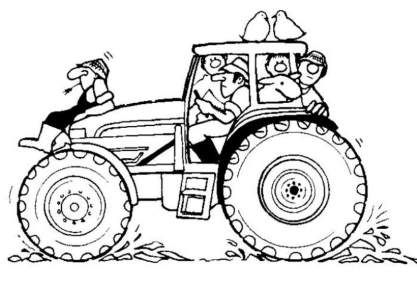
4. Aside from the driver and co-driver (if a co-driver seat is present), no other individuals are permitted to ride the tractor.
5. Children are not allowed near the tractor and farm machinery.
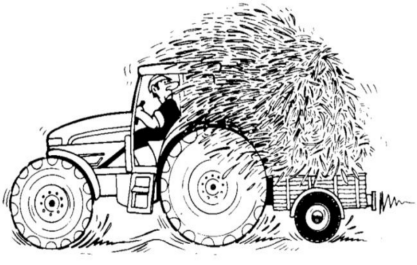
6. Before starting the engine or moving the tractor, protective devices must be properly
installed.
Driving the tractor
1. Avoid sudden braking when towing heavy objects at road speed.
2. Do not exceed the speed limit for tractors in your country. When driving on public roads,
move to the side to allow vehicles behind to pass. Use signal lights to communicate with
surrounding vehicles and warn them of potential dangers.
3. When encountering oncoming traffic at night, adjust headlights to low beam.
4. Before steering or braking, decelerate.
When driving on the road, ensure both brake
pedals are linked. During an emergency stop, both sides of the wheels should be braked
simultaneously.
5. While driving the tractor, the driver must remain concentrated and always stay seated,
refraining from standing up or looking around unnecessarily.
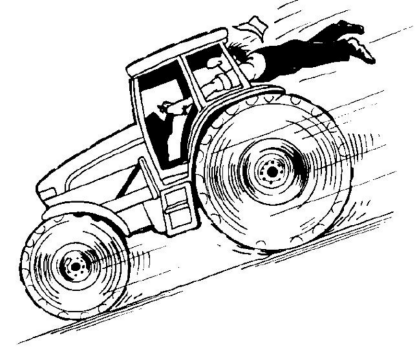
6. Do not coast in neutral when going
downhill; maintain the same gear as when going uphill.
7. For safety reasons, if the weight of the trailer exceeds that of the tractor, a brake system must be installed for the trailer.
8. Do not use the differential lock when steering; the engagement of the differential lock can hinder the tractor's turning.
9. Regularly check the clearance height, especially when driving under road height restriction signs, trees, and low-hanging obstacles.
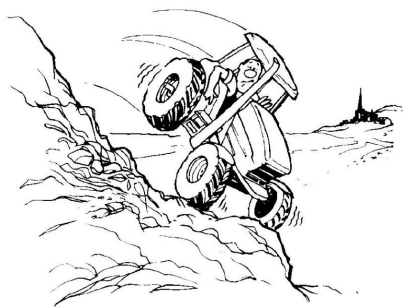
10. Exercise extreme caution when driving on steep slopes, crossing ditches, traversing
inclines, and turning at corners. Drive the tractor at a safe speed to avoid tipping over.
11. If the tractor gets stuck or the tires sink into the ground, back the tractor out to prevent it from tipping over.
Operating the Tractor
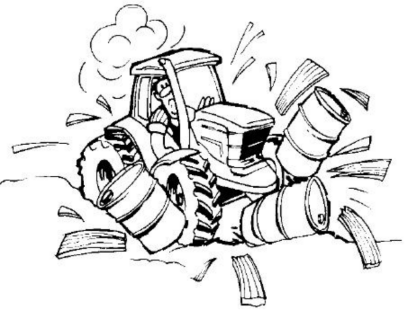
1. Avoid accidentally touching the gear shift lever when the engine is running, as this may
cause the tractor to move unexpectedly.
2. Pay attention to the use of the neutral
start function of the transmission and power
output device. To ensure safe driving, please
contact your local dealer for regular checks ofthe neutral start function. If the neutral start switch is faulty, it can easily lead to a loss of control of the tractor.
3. Before starting the tractor, ensure the gear lever is in the neutral position, the output valve
handle is in the middle position, the power output is set to "neutral", the lift control handle is in the down position, and the parking brake handle is
released.
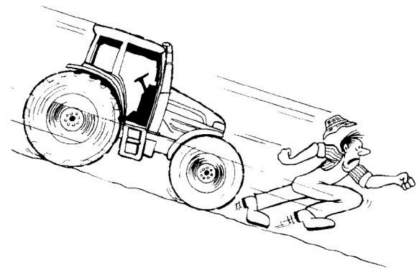
4. Do not start the engine if the driver is not correctly seated in the tractor seat, and use the
parking brake.
5. Do not park the tractor on a steep slope,
and do not mount or dismount the tractor while it
is in motion. If there are faults with the steering
mechanism or the engine, stop the engine
immediately, or the tractor will become difficult to control.
6. Before leaving the tractor, ensure it is parked on a level surface, apply the handbrake, disengage the power output shaft, lower the
farming tools to the ground, and turn off the engine.
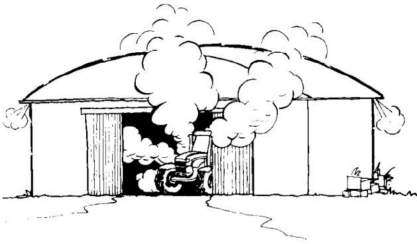
7. When working in a closed area with the
cab doors and windows open, the noise level
(sound pressure level) at the driver's ear may
exceed 85dB(A). Therefore, it is recommended
that the driver wear ear protection when operating under high-noise conditions. Avoid operating in enclosed spaces as much as possible, as the
exhaust emissions can be toxic due to inadequate ventilation, posing a threat to human health.
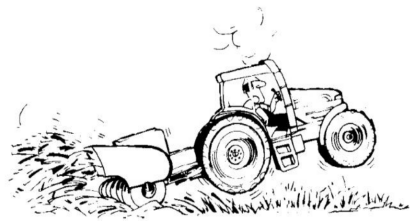
8. Agricultural tools may only be towed using a swinging drawbar or the lower link of the lift
arms in the lowest position, and should always be kept low when hitched. Towing via the tractor's
rear axle, or with a hitch point above the rear axle, could potentially cause the tractor to tip over.
Before towing, ensure the hydraulic coupling is
securely fastened and can safely disconnect in the event of an accidental separation of the agricultural tools.
9. The tractor should not be brought near
open flames, and agricultural tools should not be left in a raised position when the tractor is parked or unattended.
10. Avoid overloading the tractor, and do not hitch tools that are not specifically designed or have not been maintained for a long period of time. Follow the instructions provided by the tool and accessory manufacturers when hitching, to prevent potential harm to the driver and bystanders.
11. When spraying toxic chemicals, a gas mask must be worn.
Using the Power Take-Off (PTO) Shaft
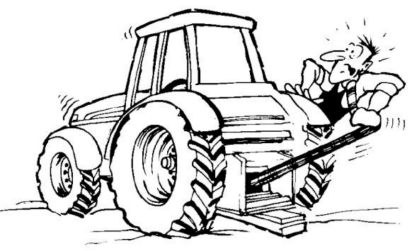
1. Before descending from the tractor cab to detach the agricultural tools, first disengage the power take-off shaft until it completely stops,
turn off the engine, and then proceed with other operations.
2. At all times, ensure that the PTO shaft
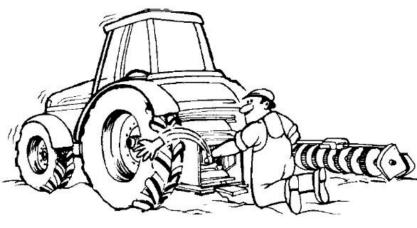
protective cover is properly installed, and the
cover must be securely placed over the PTO shaft when not in use. To avoid injuries, do not
approach rotating agricultural tools while
wearing loose clothing. Do not clean, adjust, or maintain the PTO-driven agricultural tools while the engine is running. Ensure the PTO shaft has been disengaged before performing related
operations.
3. When using the PTO shaft to operate
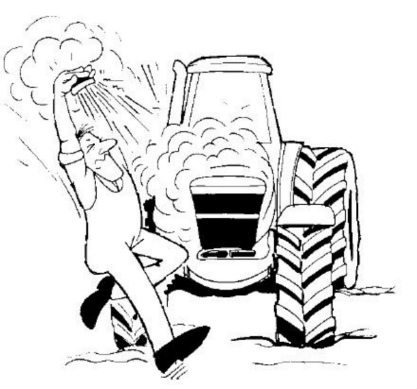
stationary agricultural tools, always ensure that the parking brake is engaged and use
wedge-shaped objects to block both the front and rear of the rear wheels.
Maintaining the Tractor
1. The liquid suddenly sprayed from a
high-pressure cooling system can cause severe
burns. Do not loosen the radiator cap when the
system is hot and the engine is still running. Only remove the filler cap when cooled to a touchable temperature. Before completely unscrewing the cap, slowly turn it to the first stop to reduce
pressure.
2. Be careful when changing or maintaining tractor wheels, as they are heavy. Ensure they
 will not fall over when stored or moved.
3. Do not attempt to repair the air
conditioning system. Escaping refrigerant can
cause serious frostbite. Air conditioning repairs require professional equipment and personnel. You can contact the local dealer to repair the air conditioning system.
4. Before performing maintenance on the tractor, the engine must be turned off. Do not adjust or allow others to adjust any parts or
functions of the tractor without consulting with the dealer.
5. Tighten all joints before starting the
engine or pressuring the pipelines. Whether
connecting or disconnecting pipelines, always
turn off the engine and release the pressure first.
6. To prevent fire or explosion, do not smoke when refueling the tractor. Batteries or cold start assistive
devices should be kept away from open flames. To prevent sparks causing an explosion, jumper cables should be used as per the instructions.
7. Untrained personnel should not dismantle or adjust fuel system components such as the fuel injection pump, injectors, nozzles, as well as the oil pump of the hydraulic system and any other components.
8. The fluids in the fuel injection system and hydraulic system are under high pressure. Fuel or hydraulic oil escaping under pressure and hitting the skin can cause serious injuries. Do not use your hand to check for leaks. Instead, use a piece of cardboard or paper to locate the leak.
9. Avoid prolonged contact with engine oil, as long-term exposure may lead to skin cancer. If skin comes into contact with engine oil, immediately wash it off with soap and water.